

Blog Student News Trainees/Teacher News

Dear Yogis,

“I have made a vow to attain Enlightenment in the female form – no matter how many lifetimes it takes”     – Tenzin Palmo

We understand that yoga is like a cave, but during our time in COVID isolation we have had the opportunity to take this a step further – our house could have been (or could be) like “a cave”.

Have any of you read “A Cave in the Snow”?  The life story (thus far) of the Buddhist nun Tenzin Palmo who spent twelve years meditating in a tiny cave over 13,000 feet up in the Himalayas.  I am sure that if you had self isolated in this extreme way, cut off from the distractions of ordinary life, all the demons lying beneath the surface would begin to rise up and taunt you.  The anger, the paranoia, the lust (especially the lust).  They all have to be overcome if like her, we wish to take another step towards enlightenment.

Certainly there have been many Saints and women mystics in all parts of the world, but taking that extra step into enlightenment has been the domain of the male.  The female body has been seen as unfit, or unworthy.

Tenzin Palmo’s thirst for knowledge and that “extra step”,  had pushed her way beyond where you or I would ever venture.  I am sure like me, you have examined your reactions to this time locked away for COVID safety, even though it was as nothing compared to her isolation and the dangers she faced if not from thieves, or animals, then from ice and snow… and of course the climate in the Himalayas – remember she was born in England.

Imagine that EVERY DAY you sat on the same cushion in the same place for hours at a time, saying the same mantras, the same prayers, and moving into the same meditations.  Every day the same as the one before. Ultimately it is a test of endurance and courage.  I know how hard most of you work at spending more than half an hour on a cushion – now imagine 12 years….

Tenzin Palmo knew that the purpose of life is to realise our spiritual nature.  And to do that we have to go away and practise, otherwise we have nothing to give to others.

The lives we live in the West for the most part are an escape.  This has been made abundantly clear during Covid.  Even in our self imposed isolation, we can turn on the TV, phone a friend, go out for a walk for an hour, even shop.  If you were in a cave such as the one Tenzin Palmo inhabited (6ftx6ft), a cave where there was no room to lie down (sleeping happened sitting up in a box which looked like a cupboard drawer), and when problems in meditation or life arose,  like her you would have had no choice but to go through them and come out the other side.  No supermarket, no shopping.  If you didn’t eke out a living from the ground around the cave in all weathers (or hopefully be remembered by villagers), then like her you starved.   She faced her own nature, nothing hidden, no way of running away (except perhaps into madness).
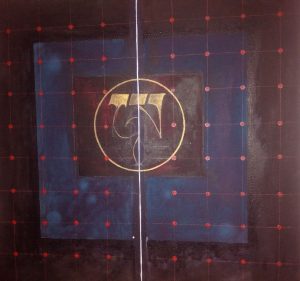
The life of Tenzin Palmo shows us that the impossible is possible.  That it is possible if not in this lifetime then in the next that there could arise a female Buddha.  Tenzin Palmo believes that she was born a woman to have these experiences and inspire other women.  There is still a long way to go.

Instead of chafing at the bit to get back to “normal”, use this time wisely to move your yoga, your meditation, and your life towards a more “Godly” pace.  In this way, everyone will win.

KEEP WELL,KEEP WARM, (and enjoy the sunshine)

NAMASTE – JAHNE
 

Dear Yogis,

What a wonderful week.  Not because we are ALL going back to something called NORMAL, but because we know we have a choice.  

Do you want NORMAL?  I have run away from it since I was a child and realised it was about mindlessly fitting in, which is where the word originated.  A “normal” was the Norman implement we now know as a set square, and it made possible great buildings, because the bricklayers could be sure that everyone was travelling in the same direction and laying bricks that aligned.  Without this implement straight lines of bricks were almost impossible.  Do you want to be “a brick in the wall?”.

I like small classes, small gatherings, being able to cross the road, people saying hello, drivers who are on the road driving and parking well because there is plenty of room, and lots of room on trains. I could go on.  Then there are many more people cooking and eating at home (beef sales are up with butchers having more customers not less).  So there are some downsides to the virus, but there is also the upside.  When the schools go back, and mums and dads can get back to work (changed conditions?) we should be able to choose change for the better.  It is not all bad.

Apart from no classes and no consults, my life is still as productive as ever.  I am still painting, doing my cards and paintings large and small.  Beatrix Potter is one of my inspirations.  A mentor?

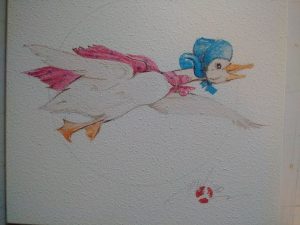
Here is Miss Jemima Puddleduck I painted for one of my lovely students.   I don’t often delve into my childhood images, but Beatrix Potter’s tales certainly lend themselves to this.

They were beloved books, and Beatrix herself was a fascinating person.  A genius.  Most people just think of the “Bunny Books” when they think of Ms.Potter, but in actual fact these were a smokescreen to the scientific work she did in fungi and bacteria.  Her Bunny books were so beautiful because she kept rabbits (and many animals in lieu of friends), observed them, drew them endlessly, and when they died a natural death, she drew them in death, and then the skins and skeletons.  She loved them.

Pasteur corresponded with her as an equal scientifically, and developed his work using her theories.  If she had been a man (or lived in France perhaps) we would have heard much more about her, as we have about Marie Curie for instance.  Beatrix couldn’t have done more, but people would have paid attention instead of dismissing her efforts.

In spite of her constricted Victorian upbringing (she lived most of her life in a world of covid like restrictions), she was able to do an enormous body of work that you will only learn about if you know more about her.  Her scientific drawings of fungi are still in English museums, her work is treasured by these institutions.  She was the first to identify and illustrate some fungi but her name was never added to their scientific name as is usually the case.  Why? Mainly because she was a woman.  The only way she was admitted to the Royal Society and The  Linnaeus Society  was because her uncle who was himself a member of these organisations lobbied on her behalf.  However, it made no difference to her status.  She was still seen as a wealthy, “dabbler’, and not to be seriously considered in science.  However, if she had been a man and allowed to exercise her scientific muscle, we may never have seen all her wonderful children’s stories…..  and I believe the world would have been a lesser place.

She didn’t have children, and was trotted all over London to be introduced to society in the hope that she would meet a man and do her duty. This caused a lot of conflict within her and led to a number of nervous breakdowns and illness.  She did marry much later in life and on her own terms.  However, within these restrictions (and without any of the modern computers etc, using only papers,  pen and brush)  she wrote a number of books a year, and drew sometimes upwards of 60 fungi illustrations from life per year.  She had to go out, find the fungi, dissect etc etc. all in (quiet) defiance of her parents and within the restrictions of her age and class.  Restrictions which you may have considered “imprisonment”.

If she can do this, what are you doing?  How are you contributing to your world during this ongoing Covid restriction, or are you caught up in the “I CANT’S”?  In spite of everything, Beatrix lived, loved, laughed and left a legacy. 

Have a fabulous PRODUCTIVE day.

Namaste – Jahne


Dear Yogis,

“When we speak of inner discipline, it can of course involve many methods.  But generally speaking, one begins by identifying those factors which lead to happiness and those factors which lead to suffering.  Having done this, one sets about gradually eliminating those factors which lead to suffering and cultivating those which lead to happiness.  THAT IS THE WAY”. -The Dalai Lama.

Today I was sitting looking at all my books, hundreds of them.  I was looking for  an author who had (reliably) written about HAPPINESS.  There was only one who spoke of it in a human, achievable way –  THE DALAI LAMA.

I thought that all of us need reassurance of a bigger picture, of an art called “Happiness”.  The Dalai Lama  goes even further the that, he calls it THE RIGHT to happiness, and he has written about it a lot.  So, rather than re-iterate what he has said for almost his entire life, I thought I would tell a story told about Him.

In 1993 The Dalai Lama was giving a series of lectures at The University of Arizona.  Here everyone, not just the conference participants,  witnessed his willingness to reach out and create a feeling of goodwill and affinity with others, even in the briefest of encounters.

One morning after his public lecture, the Dalai Lama was walking on an outside patio on the way back to his hotel room surrounded by his usual retinue.  Noticing one of the hotel housekeeping staff standing by the elevators, he paused to ask her “where are you from?”   For a moment she appeared taken aback by the foreign looking man in the maroon robes and seemed puzzled by the deference of the entourage.  Then she smiled and said shyly “Mexico”.  He paused briefly to chat with her a few moments and then moved on, leaving her with a look of excitement on her face.  

The next morning at the same time, she appeared at the same spot with another of the housekeeping staff, and the two of them greeted him warmly as he got into the elevator.  The interaction was brief, but the two of them seemed flushed with happiness as they returned to work.  Every day after that they were joined by a few more of the housekeeping staff at the designated time and place, until by the end of the week there were dozens of maids in their crisp grey and white uniform forming a receiving line that stretched along the entire path that led to the elevators.

What is the purpose of our life – your life? What makes your life meaningful? As The Dalai Lama has shown us, do you take time to not just notice others, but do you love enough to interact with them, make a connection?  The person who has been co-opted to disinfect the baskets at Coles, the person who collects the carts, who picks up the trash? Or abiding by the restrictions that apply regarding gathering and sanitising in this time of covid wether you believe  in them or no – just for the protection of others?  Why? Because you genuinely love and care for others at least as much as you care for yourself.   Love your neighbours as yourself.

What if we begin with the idea that the purpose of our existence is to seek happiness? A vision of happiness as a real objective, and one that we can take real steps towards achieving.  As you begin to identify the factors that lead to a happier life, you will learn how the search for happiness offers benefits not just YOU, but  changes everyone your life touches, even a maid standing outside an elevator.  It is easy – do more of the things that lead to happiness, and less of the things that lead to sadness or unhappiness…. 

If you possess an inner quality, a calmness of mind, a degree of stability within, then even if you lack various external facilities you would normally consider necessary for happiness, it is still possible to live a happy and joyful life.  How can we achieve this inner contentment?  There are two ways.

  1. The first way is to have everything we want and desire.  This is an unreliable way because we will always desire more, and the next thing.  It is unreliable because sooner or later we will come up against something we can’t have.
  2. A more reliable method is NOT to have everything we want, but to want and appreciate what we have.

“Inch-worm, inch-worm, measuring the marigolds, don’t forget to stop and see how beautiful they are”.     – The Frog, Sesame Street.

Don’t just think about it – reach out.  Start with small things.

Keep well, keep warm.

NAMASTE  JAHNE