
Blog Student News Trainees/Teacher News
Dear Yogis,
Yesterday the funeral procession for Thich Nhat Hanh happened.  His followers and fellow monks trailed a procession of pallbearers carrying Nhat Hanh’s coffin from Tu Hieu Pagoda, where he spent his last days, to the cremation site.   Others kneeled and clasped their hands in prayer on the roadside and bowed to the ground as the casket went past.
Our friend Tenzin Choegal has written and sung a wonderful farewell,  the link to which I have put below.. If the link does not happen for you, just google. ……. A prayerful Homage to Thich Nhat Hanh https://youtu.be/m59Dx5WL7ro


Thich Nhat Hanh, the monk who popularized mindfulness in the West, died in the Tu Hieu Temple in Hue, Vietnam, on Jan. 21, 2022. He was 95.

In 2014, Thich Nhat Hanh suffered a stroke. Since then he was unable to speak or continue his teaching. In October 2018 he let his devotees know, using gestures, that he wished to return to the temple in Vietnam where he had been ordained as a young monk. Devotees from many parts of the world had continued to visit him at the temple.

For Thich Nhat Hanh, mindfulness (the main strand and foundation of his teaching) was not a means to a more productive day but a way of understanding interdependence, the connection and codependence of everyone and everything.In a documentary, “Walk With Me,” he illustrated interbeing in the following way:

A young girl asks him how to deal with the grief of her recently deceased dog. He instructs her to look into the sky and watch a cloud disappear. The cloud has not died but has become the rain and the tea in the teacup. Just as the cloud is alive in a new form, so is the dog. Being aware and mindful of the tea offers a reflection on the nature of reality. He believed this understanding could lead to the possibility of more peace in the world.

THE SCHEDULE FOR THE WEEK.
STUDIO:  Monday 1pm Yoga, Wednesday 5.30, Friday 5.30
ZOOM: Monday 6.30 The Gita, Tuesday 7.30 Herbal Class, Friday 6.45 Tarot.

I WILL SEE YOU ON THE MAT.

NAMASTE – JAHNE
Dear Yogis,

You may be suffering COVID FATIGUE but I saw this hidden away on twitter, and thought you may be interested.  This virus is the same as most other virus, it causes complications in the body that don’t manifest for years, so we mustn’t get complacent.  It is important we keep up our supplementation, and look after our nutrition especially if at any time we have tested positive, or imagine that we have gone through some part of the process without actually testing positive. 


THE STUDIO/YOGA SCHEDULE FOR THIS WEEK.
ZOOM, FRIDAY 6.45 Tarot – we are going to do a business/life spread and interpret it.
STUDIO, FRIDAY 5.30 Yoga.  SUNDAY 12pm to 4pm A drop in time.  Take the opportunity to come see me, discover what we do here, see the ION-KI FOOT CLEANSE, the Tattoo designs, and maybe discuss Tarot.  Whatever you like.  I am here for the ‘tour”.


GARLIC GROWING
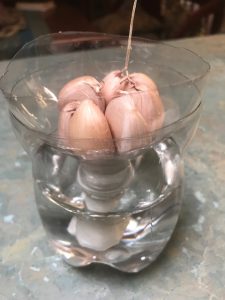
This is a modern Russian Gardeners idea, and I like it.  Cut an empty drink bottle in half use the funnel stopped with a wick made of cotton wool or as I have, paper towel,  to hold the garlic cloves.  You can peel the cloves or not, I don’t.  You will see little shoots appearing, and the roots going down.   Once you see the roots you can take out the wick and let the roots spread.    Then plant them.  This in the photo is Elephant Garlic – BIG.

The plastic bottle and the garlic is quite attractive, and you could have a few on the windowsill, they look good.


VEGETABLE BOXES
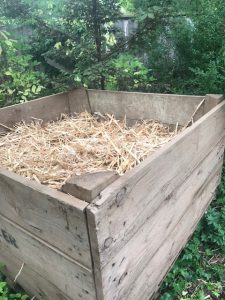
Here is my new vegetable box.  I have two, quite a size.  They were a birthday gift from a student, and I imagined what would arrive would have been  a considerably smaller model, but no, these are full size, and a much sturdier construction than my house actually – “well built” would be an understatement!  Many thanks to Mark and Katie who moved them into position for me.  They had the proper “piano moving” equipment, so it was relatively easy.   I think I will paint them to blend them into the garden a bit more, or paint them terra-cotta to accentuate the positive.

I put one in full sun and I am going to grow potatoes and artichokes in it.  Potatoes to build the soil in the first instance.  The one in the photo is in dappled shade, so,  comfrey, gotu-cola, and cranberries will be the first things I put here.  Also I will also use it to mature white raspberries, (my new fruiting bushes), prior to putting them in the garden.   It has made me think about the various spaces much more, and how to best use the areas in the garden I already have.   They are a work in progress.

I am talking now with John about trialling a Kenyan top box bee hive for him.  I have two places in the garden it can go….


When you come for your IONIC FOOT CLEANSE, your Bach Remedies or a Yoga Class, you are welcome to look around the garden…  Or you can just come and talk herbs with me.  Love to see you.


SEE YOU IN THE GARDEN.

NAMASTE – JAHNE


Dear Yogis,

Over the last few weeks we have been focussing on all things HEALING, and today I thought we could detour to SINGING BELLS.  These are often overlooked as a healing modality on their own, but now in America, thanks to the artist Guadalupe Maravilla, therapists and even scientists are taking a second look.  CCP GRADUATES TAKE NOTE.

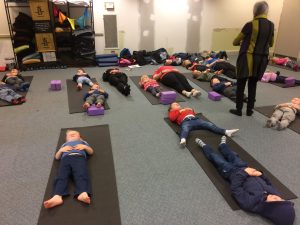
Maravilla used these therapies on himself whilst recovering from cancer.  When he discovered their effectiveness he started to construct installations based on sound so that others (especially children) could experience this therapy.  Not exactly new, and overcomes the complaint “I want to meditate but I can’t”.  Add pain to this perceived difficulty and you have a client who will resort to heavy duty pain medications instead of moving forward into yoga based therapies.  With sound therapies there is no learning curve, you just lie on the mat and let go.


Merely lying down and listening to the high-intensity, low-frequency combination of singing bowls, gongs, and bells in a sound meditation could induce a deep relaxation response and positively affect mood and sense of well-being. Sound healing has been used for centuries by yogis and utilized in various forms by cultures the world over, including native peoples. Although we don’t think of it the same way, Australian aboriginal tribes have used the didgeridoo as a sound healing instrument for over 40 000 years.  Ancient instruments have also been used for religious and spiritual ceremonies such as Tibetan (also called “Himalayan”) singing bowls, originally used by Tibetan monks for spiritual ceremonies.

Heart disease, diabetes, addiction, and mental health issues have all been linked to stress and tension. Meditation, including systems such as mindfulness-based meditations, has shown promise in inducing the relaxation response and helping alleviate anxiety and improve well-being. The relaxation response is the body’s physiological response in relaxation, including lowered blood pressure to counter the fight-or-flight response and activation of the parasympathetic nervous system.

In one study, singing bowls were used for emotional healing with high-risk youth as part of what was termed the best self-visualization method.  The bowls were used in a psychotherapy model in combination with deep breathing, visualization, and a loving kindness meditation. The authors of the studies I have read reported that this combination of healing methods may be a catalyst for emotional and psychological healing in counseling sessions.

The studies does, provide the groundwork for future research regarding the effects of singing bowl meditations on assessments of stress and well-being. As we have discovered in Yoga meditations, this low-tech form of meditation may have the capacity to lower blood pressure and heart rate, thus there are potential benefits to cardiovascular health yet to be further explored. The results provide promise for a form of stress reduction that does not require the individual to learn a disciplined form of meditation. In fact, the participant may even fall asleep if desired. At the very least, participants generally express feelings of deep relaxation and inner peace following the sound meditation.

Moreover, those in health professions (and as I have said, CCP Graduates),  nurses and counselors could easily provide these meditations to patients. While it may require a very minimal amount of practice, extensive training is not necessary to learn to play the singing bowls and other instruments, thus, this type of meditation could be taught to health and counseling professionals and provided in an almost unlimited number of settings to induce the relaxation response, reduce stress, and potentially stress-related disease in the body.

I am sure that there are ongoing studies, and over time we will learn of the bowls remarkable properties in depth.  In the meantime, let’s take the opportunity to take these therapies into various settings (and in our studios) and introduce it to clients.  Not as a special occurrence, but as a regular part of our practice.


SEE YOU ON THE MAT.

NAMSATE.  JANE