



Dear Yogis,
Nothing much to say except I am glad I am going backwards in time around my house and garden, away from electricity, away from “modern”.
 Have you dealt with Origin lately… I was happy, over-paid my bills on time on a plan, and over a year or so accumulated about $650 credit. Origin were very reluctant to refund the credit, and it took about 2 weeks of daily calls to get my own money back. Although I was refunded the credit, there was a condition that applies to everyone, I did have to go off my plan and then re-apply to get back on. In the time that had elapsed (about 2 weeks), the price of my plan increased. This increase amounted to about $20 every 2 weeks!!! and there seems to be no way of reducing this, this is the base rate – in spite of the fact that I had MASSIVELY reduced my electricity use. They did say that I would be credited with any over-payment of electricity charges, obviously I would have to go through the same procedure to get it back.
It appears to me that Origin is accumulating our money and using it over the period of our plan, and holding on to it as long as possible, and putting in place mechanisms to dissuade us from getting it back (yes, they tried to tell me it was not a REAL credit). I will let you know my actual reduction when I get my bill next quarter. I have been pleased with Origin in the past, but I am not pleased with this, and will be looking around for a new supplier. Any suggestions?
MORE ON THE FIRE FRONT
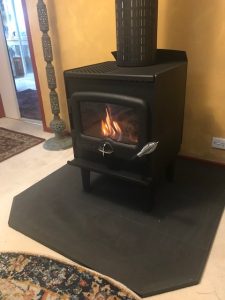
The band LED ZEPPELIN had a fireplace complete with logs on their private plane (obviously “ex-Origin” customers too), however, mine is doing well in the house. I am learning so much about dealing with wood and logs at my (venerable) age. Gone are the days when I would willingly swing a splitter but there are options I have found and I am trying them all. There is a wonderful thing that looks like an instrument for a torture chamber, but is a wood splitter that reduces energy needs – I am getting one of those, and a mini-mini ladies chain saw which will cut small logs up to 10cms, and I am getting one of those. When I have used them I will let you know.
It does take thinking about. It does take acceptance of change, and it does lean heavily on yoga. Without yoga and meditation I doubt that i could make these changes either mentally or physically – Forget about the gym. God gave me the garden, the physical and the mental challenges and the computer so I could let you all know. It is my responsibility to use them in the right way and to teach as many of you as are listening.
CURRENT STUDIO/ZOOM SCHEDULE: (Studio Yoga – Mondays and Wednesdays at 1pm are Full)
WEKLY STUDIO/ZOOM SCHEDULE (PLEASE BOOK AHEAD – NO YOGA STUDIO DROP-INS, sorry)
ZOOM: Mon. 6.30 FREE OF CHARGE Teacher Training/Gita, Tues. Herb workshop 7.30, Friday 6.45 Tarot – $50 for 4 Friday classes.
STUDIO YOGA:Mon. 1pm (full) 2.15pm, Wed. 1pm Restorative(full),2.15 Friday 1pm, 2.15 Hatha, SATURDAY 1PM, 2.15 RESTORATIVE or HATHA YOGA.
MONTHLY LUNCHEON: Thursday 30th June at 12noon at “The Vic” in Woodend (If you are running a bit late, relax, it’s OK – drop in for dessert. We have the meeting room, so it is separate and quieter). Please let me know if you can join us. We will post an invite closer to the day. RSVP PLEASE
CONSULTATIONS: Tarot/Bach/QHHT HYPNOTHERAPY, Bowen or a combo – by appointment only. $85 including remedy (including postage if zooming) Past-Life (QHHT taught by Dolores Cannon) $250 via email or in the studio. The reading includes Time, date, place of the prior life. To discuss, email yogafirst2@bigpond.com
TEACHER TRAINING: Unfortunately there appears to be a glitch in the videos – some can read them, some students can’t, so we have discontinued their use as they have been difficult. I have a USB with them all on, and I will be sending this in lieu of the videos to all NEW students. This may prove to be a better option.
WEEKLY MEETINGS: We have free Teacher Training zoomed on Mondays, and we began our yoga teacher asana class/meeting in the studio WHICH WE HAVE ORGANISED FOR EVERY SECOND SUNDAY BETWEEN 2 and 3pm. NEXT CLASS Sunday 19th June.
I WILL SEE YOU ON THE MAT.
NAMASTE – JAHNE
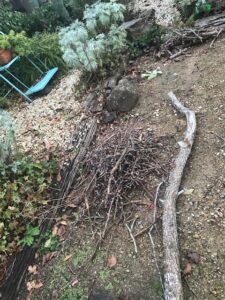
 Another full day on my “farm”. It is not a farm in the ordinary sense,
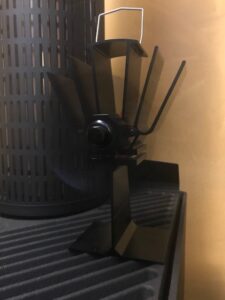
 latest purchase is a little fan for the top of my wood fire. I didn’t buy model with a fan, and now I have little fan which sits on the top of the unit and pushes the air around using the hot air itself as the energy source. No gas, no electricity, no solar, just the energy of the heat from the fire itself. How great is that!
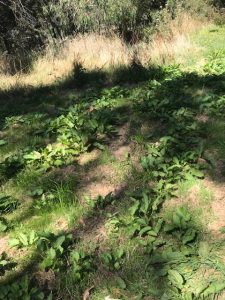 NATURAL ART MATERIALS
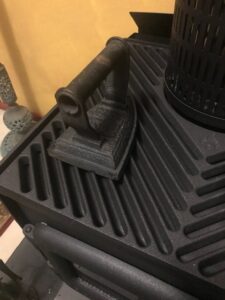 There is so much to do now I am living in a different era to the rest of you – wood fire (carting, and stacking wood), herbalism, jamming, gardening. You will be pleased to know my little French smoothing iron is working beautifully. Last night I did the first ironing with it – it is heavy, and it doesn’t lose heat like my electric cordless ironing station. It is that little word “electric” that makes all the difference. Now I am “unplugged” in that regard… but I am still walking backward. There are other things I need to walk backwards in time effectively. I don’t think I will be walking without shoes or socks to collect eggs at 5 in the morning as Tash Tudor did (I am told).